| Hong Kong Movie Reviews Menu |
PTU: Into the Perilous Night
Buy this film!
| Rating: | 8/10 |
| Year: | 2003 |
| Genre: | Action |
| Director: | Johnnie To |
| Cast: | Simon Yam, Lam Suet, Ruby Wong, Raymond Wong, Maggie Siu, Lo Hoi-pang |
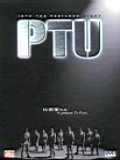
(Spoiler alert!)
It is definitely not inappropriate to say that PTU is the most personal and stylistic accomplishment of Johnnie To since The Mission (1999). Apart from the commercial comedies like Love on a Diet and Fat Choi Spirit that are generally not welcome by To's crime genre fans, the over-glamorous Fulltime Killer and the excessively calculated Running out of Time 2 are also less than satisfactory. It is until the making of PTU that Johnnie To was allowed to exhibit his extraoridinary talent in filmmaking without restraint.
Similar to The Mission, the story of this film is very straightforward. Detective Sa (Lam Suet) loses his gun when he is attacked by a group of gangster. He is afraid that the missing gun will affect his promotion. But luckily, his friend Mike (Simon Yam), the leader of a PTU (Police Tactical Unit) that is patrolling the street in the city, decides to find the gun for him privately. Their deadline is the coming dawn... The story of a missing gun is no stranger to fans of Asian cinema, for instance, Akira Kurosawa's Stray Dog is a masterpiece of the same genre. But Johnnie To's version of this crime story is totally different from any of its counterparts. This film offers To's unique perspective on Hong Kong as well as his approach of filmmaking.
For those who have seen Longest Nite or The Mission, you should remember the careful and artistic use of lighting in the films. The texture of the lighting is especially rich and subtle. Again, To manipulates the lighting in PTU stylistically. The contrast of the dark and light objects is beautiful rendered that succeeds in challenging the eyes of the audience. The frequent alterations of lighting objects not only reflect the puzzled and nervous mind of the characters, but can also be viewed as the ambiguity of the characters' identities, as good and evil are never so distinct in the film. In addition to the powerful and overwhelming images, background music is brilliantly composed as usual.
Talking about the theme, the focus that has been mentioned by numerous critics is the dialogue in the beginning, "Those wearing the same uniform are part of the family". This dialogue is seen as an encouragement to promote the integrity of Hong Kong during the hard time. Personally, I did not disagree with this view, but I was wondering if any alternative interpretation is available. By that I actually believe the plot may contain saitirical elements that target the government. For instance, if it is not because of Sa's carelessness, everything would not have happened. And since Sa is a representative of a typical civil servant, the metaphor behind is not too hard to get. The fluke resolve at the end is probably the filmmaker's view on the attitude of the government when dealing with complicated social matters...
While Infernal Affairs is famous of its depiction of the ambuiguity of human's mind, PTU's delineation of the same subject is actually even more impressive. It is really hard to define the behaviors of Mike and his colleagues, that is, the excessive use of violence and their relationship with the gangsters, as good or evil. Justice, or more simply put, black and white, is blurred when the cops use the same mean to solve the problem as the gangsters does. Nevertheless, PTU lacks the level of entertainment as seen in Infernal Affairs, that may explain the big difference between the box office results of the two films. Simon Yam as the leader of this mixture of good and evil is unexpectedly persuasive, along with the vivid Lam Suet and other To's regulars like Ruby Wong, Maggie Siu and Lo Hoi-pang, the overall quality of the cast is worth our acclamation.
PTU is a perfect demonstration of pure cinema. Although it was never a commercial hit in Hong Kong, it is without doubt a film that can stand the test of time.
Cool guy(s) - Simon Yam, Lam Suet
Reviewed by: Kantorates