| Hong Kong Movie Reviews Menu |
In-Laws, Out-Laws
Buy this film!
| Rating: | 6/10 |
| Year: | 2004 |
| Genre: | Comedy |
| Director: | Clifton Ko |
| Cast: | Eric Tsang, Lydia Shum, Shawn Yue, Su Zhi-dan, Guo Chang, Peng Cheng-zhi, Coco Jiang |
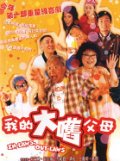
Adapted from a popular TV drama in Guangzhou, In-Laws, Out-Laws
is another Hong Kong/mainland co-production featuring half of the cast
from HK, and another half from Guangzhou.
With the box office mega hits like It's a Mad Mad World and All's Well, End's well, Clifton Ko was once the most successful "Lunar New Year" comedy filmmaker in the late 80s and early 90s, but then he was shifting his focus to theatrical performance in the past few years. It was not until the beginning of the new millennium that he returned with the moderately received Winner Takes All (2000). And after a 4 years break, this time he is partnering with producer Raymond Wong again and produces his first "Lunar New Year-based" HK/mainland co-production.
Just as mentioned above, this is the movie version of a popular TV drama in Guangzhou, and as a result, the background is also set there. It starts off with the discovery of a possible historical traces at the backyard of the Hong's family, and a promise from the government that a huge amount of compensation would be assigned to them if the discovery is confirmed. Everyone of the family is impacted by it but they are not aware that their family relationships are also deteriorating... If you are a fan of Ko's Lunar New Year comedy, you may probably notice that Ko's formula doesn't really change that much. Similar to films like All's Well, End's Well, it still features a traditional family with the three generations living in the same house; The story is still about the collapse of this big family due to internal or external conflicts each family member is facing; And the ending is still abrupt and everything just becomes so perfect all of a sudden.
Apart from the expected "Lunar New Year" sub-theme, the subject matter of this movie, as hinted by the original mainland title Foreign Daughter-in-Laws, Domestic Son (literally), is actually about the coexistence of Chinese people from different regions or with different origins. By "foreign" I am not saying it from an international perspective, it simply refers to different region of China. Although Putonghua is the official dialect of the country, China is nevertheless a very big country and there are hundreds of dialects still being used by people from various areas. The traditional customs of each of these areas are also nothing similar. Therefore, it is necessary for people from different areas to respect and understand each others' culture in order to promote their conexistence, and that is what this movie is attempting to do. However, I wouldn't call it a success in this regard. Without doubt some of the gags are funny and Ko's observation of the cultural barrier between the people from the north and the south is also incisive, but other than generating some laughters here and there, these funny moments just don't seem to work coherently and make you think deeper about the subject matter. The ending, with the theatrical farce and the didactic message presented by the actors, is especially an anti-climax that is totally disappointing.
Talking about the actors, The HK representatives include Eric Tsang, Lydia Shum, Shawn Yue, James Wong, Cyrus Wong and Coco Jiang (although she is from the mainland, I would still put her in this category as she has been in more HK movies than mainland ones) and the rest are mainly mainland actors who are the original cast of the TV drama. All of them are carrying out their duty well, but there isn't anyone who is exceptionally impressive. Just as a side note, Shum and Tsang do look younger than their two step-sons, which is quite ridiculous and probably not intended but funny.
Reviewed by: Kantorates