| Beyond Hong Kong Movie Reviews Menu |
Song at Midnight
Buy this film!
| Rating: | 8/10 |
| Year: | 1937 |
| Genre: | Horror |
| Director: | Ma Xu Wei-bang |
| Cast: | Jin Shan, Woo Ping, Si Chao |
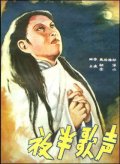
Song at Midnight is the original version of Ronny Yu's Phantom Lover (1995,
starring Leslie Cheung). It is also one of the early representatives of cult films coming
out from China. If you are a fan of Western monster movies like Dracula or
Frankenstein, you should definitely check it out.
Apparently, the story is inspired by Phantom of the Opera, with Jin Shan playing the role of "the Chinese version of Erik the Phantom" Sung Dan-ping. Dan-ping is a popular opera singer who also has connection with the underground revolution party. He falls in love with the daughter of a general Xia (Woo Ping). The general is displeased and his henchman decides to punish Dan-ping by disfiguring his face with acid. The mutilated Dan-ping is afraid to face his lover again, and spreads out the news of his death... Ten years later, a young opera singer Sun Xiao-au (Si Chao) meets Dan-ping by accident and soon learns about what has happened to this living tragedy...
It is not inappropriate to regard Song at Midnight as a cult film, especially if you compare it to most of the other Chinese films in the 30s that are rather conventional and actively promoting the unification of the country against the invasion of Japan. Certainly, this film also contains some plot elements that publicize patriotism, which can be seen as the director's compromise to fit the general interest, but for the most part, it is totally different from its counterparts in terms of the story and visual designs, which includes the character, costume and settings. For instance, as I have mentioned above, Sung Dan-ping is a replica of Erik the Phantom from Phantom of the Opera, while his loyal servant also shows heavy influence of Hunchback of the Notre Dame. Unlike any Chinese films in which the servant is always an old maid, this servant is a freaky old man who has a deformed face, strange long hair and hunchback. The costume design and the settings are also westernized. Almost every character in this film wears western suits or non-oriental dress. Xia's white cloak should be familar to fans of Bride of the Frankenstein. The locations, from the western opera theater to the European style of buildings, are products of the West. Director Ma Xu Wei-bang's obsession with the monster genre (notably the Hollywood monster movies in the 20s) is clearly demonstrated in this film.
Judging from the scale of the settings, special effects and the extras, this should be a big budget production in the 30s. Most of the scenes are set up properly and the use of lighting is extremely sophisticated. A little bit dark in general, the dim lighting captures the characters in an artistic way. The somber and gloomy mood is also greatly intensified. Talking about the special effects, the development of make-up effects was quite advance at that time. The disfigured faces of Dan-ping and the old servant are terrific and it is hard to spot any flaws.
Jin Shan was one of the most popular actors and directors in the golden era of Chinese cinema. With a handsome face and a high pitched voice, Jin portrays his character successfully. He and Leslie Cheung did look alike both in terms of appearance and the gestures. That may explain why Ronny Yu would cast Leslie Cheung in the remake of this film.
Deviating from the mainstream direction, Ma Xu Wei-bang's Song at Midnight is a product from another dimension. Although the enormous reference of Western cinema and culture has made him an easy target for plagiarizm, what should not be ignored is Ma Xu's extraordinary talent and manipulation over his materials. With a strong knowledge of the cinematic language, Ma Xu had created some of the most notorious yet exciting cult movies that are rarely seen in the diaspora of Chinese cinema.
Reviewed by: Kantorates