| Beyond Hong Kong Movie Reviews Menu |
Shanghai Dream
Buy this film!
| Rating: | 7/10 |
| Year: | 2005 |
| Genre: | Drama |
| Director: | Wang Xiao-shuai |
| Cast: | Gao Yuan-yuan, Yao An-lian, Li Bin, Wang Xue-yang |
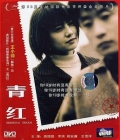
Just like a lot of his counterparts, sixth generation director Wang
Xiao-shuai used to be an unwelcome figure at the film censorship department
in mainland China. Although his movies like Frozen and Beijing
bicycle were well received in the international film market, he was
never able to publicly screen any of them in his mother country. However,
with the current renovation of the film commission, Wang's director status
finally got reapproved by the authority and he soon made his return to the
"foreground" with a sophisticated drama Shanghai Dream. The film is
also a winner at the Cannes Film Festival grabbing a special jury award.
Originally titled as I am 19, in which the plot was supposed to center on the stories of two women from different generations, Wang kept rewriting and eventually it became the story of one single girl in the early 80s as we see in Shanghai Dream. Qing Hong (Gao Yuan-yuan) is a high school student living with her family in a small town in Gui Yang. Although they are native from Shanghai, Hong's father Wu (Yao An-lian) decided to move to this small town in the early 1960s in response to the government's relocation and development scheme. After 20 years of exploitation, Wu begins to think that he has actually made a wrong decision and they should go back to Shanghai for the sake of his two kids' future. However, He is not able to carry out his plan swiftly due to their residential status as well as the pressure and obstruction from the place he works. Moreover, what makes Wu more enraged is that he discovers Hong's clandestine affair with a local factory worker Gen (Li Bin)...
One characteristic of the sixth generation directors is their affluent interest in the life of ordinary individuals. Their movies are usually about the daily life struggle of these commonplace people under difficult social situation. The thematic approach of Shanghai Dream is generally following this trend. Loosely adapted from director Wang Xiao-shuai's personal experience and also stories from his friends and relatives, most of the scenes depicted in the movie are supposed to be an accurate record of the real life of people in that period in China. Characters like Wu, who are nostalgic about their hometown and hoping to find a way out, should be able to instigate the collective memories of certain generation of people who have gone through similar stages of life at that time. Nevertheless, for the younger audience, the movie is also engaging as it is able to offer a sentimental account of the misfortune of a family in which the sympathy and emotion are universal.
Having said that, this film is still far from being flawless. On the positive side, being emotional can keep the audience engaged, but then it is also likely to lead to the over-dramatization of the story, and hence weaken the aspect of realism emphasized by the film, which I believe is the intention of the director. In this film, some of the characterizations and relationships are ostensibly handled. For instance, the father Wu is quite a cliched character and his interactions with Hong are always one-sided and never seem to be moving forward (or backward). His conflict with her wife is also rarely developed. The same also happens to Hong and her close friend Xiao Zhen (Wang Xue-yang). Their dialogues are blatant and they feel more like staged lines than actual conversation between two intimate friends.
Compared to the flawed script, Wang Xiao-shuai's cinematic approach is certainly more remarkable. Wang's style is different from some other sixth generation directors like Jia Zhang-ke who favors a more spontaneous filmmaking technique. He seems to be more cautious about the framing and editing of his films. Since he loves to restrict the movement of the camera, most of the compositions are carefully framed. Together with the frequent use of long take, ambient sound and empty shots, Wang has successfully captured the "atmosphere" of the diegetic space and recreated a believable and lively world. It makes the audiences believe that it is a real world that actually exists.
Gao Yuan-yuan as the repressed high school girl Qing Hong is persuasive. Although she is much older than what the character is supposed to look, her precise apprehension and manipulation of her character do overcome all the shortcomings and help her pull off an eye-catching performance. Veteran actor Yao An-lian as her father is also engaging. However, as I have mentioned above, due to a lack of character development and a little overacting problem, this character just couldn't win the heart of the audience very well. Li Bin, one of the leads in Wang's Beijing Bicycle, makes another strong portrayal as a lustful factory worker. Yet it is too bad that he only shares less than 1/4 of the screening time in the movie.
As Wang's first effort after returning to the mainstream, Shanghai Dream shows clearly the director's desire to balance the commercial and artistic elements. Although I wouldn't call it a success, especially with the somewhat melodramatic storyline, it is still a highly watchable film that efficiently demonstrates the potential of Wang Xiao-shuai as one of the most important directors of his generation.
Cool guy(s) - Gao Yuan-yuan
Reviewed by: Kantorates