| Beyond Hong Kong Movie Reviews Menu |
Missing, The
Buy this film!
| Rating: | 7/10 |
| Year: | 2003 |
| Genre: | Drama |
| Director: | Lee Kang-sheng |
| Cast: | Lu Yi-ching, Chang Chea, Miao Tien |
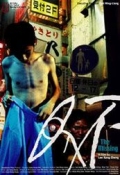
After seeing Goodbye, Dragon Inn and The Missing in a row, I admitted that
I felt a little tired, but it was definitely not a boring viewing experience... at least I
didn't fall asleep. At first glance, Tsai Ming-liang's movies are always hard to underestand.
The story is usually very loose, and the pace is so slow that it is not uncommon to see a still
shot that lasts for more than three or four minutes. But everything will become much more
enjoyable and easier to underestand if you can appreciate the fact that the focus of the
filmmakers is always not the story alone, but their emotions. Just like Chinese poem, what
Tsai Ming-liang and Lee Kang-sheng, a regular actor of Tsai's films who's making his
directorial debut with The Missing, try to do in their movies this time is to incorporate their
inmost and personal emotions with the story of certain group of missing people.
In the beginning of the production, Goodbye Dragon Inn and The Missing were supposed to be one movie, with Tsai Ming-liang directing one half, and Lee Kang-sheng directing the rest. But for some reasons, the project was separated and became two feature length movie. However, the stories of the two movies are instead coherent and related. It starts off with the disappearance of an old man (Miao Tien) and a little boy in The Missing. While The Missing depicts the search of these two missing people, Goodbye Dragon Inn does reveal to us that the two are actually in an old theater watching the movie Dragon Inn. Therefore, if you want to view the entire story in its complete form, the best way is without doubt to watch the two movies in a row.
Having starred in so many of Tsai Ming-liang's movies, it is not difficult to see Tsai's influence on Lee Kang-sheng. Not to mention the seemingly spontaneous narrative and the distant and observational camerawork, Tsai's usual theme of urban solitude is also the primary interest of Lee. In this movie, we are reminded again and again of such sense of isolation. People are everywhere in the city, but there is hardly any intimate interaction. When grandma (Lu Yi-ching) is looking for her kid, nobody actually cares too much about her. Those who help are more or less reluctant to do anything. Moreover, this feeling of detachment is further enhanced by the director's emphasis on how easy it is for someone to disappear in the city without being noticed. The old man and the kid are the obvious example, they are gone and nobody cares, even the police cannot do anything about it. It is the same for the middle-aged guy who suddenly faints on the street. He just falls down and then that is it... Perhaps Lee Kang-sheng's view is pessimistic and horrible, but it is nevertheless a very truthful rendering of the consequence (or side effect?) of rapid urbanization.
The Missing without doubt belongs to the alternative genre. It is the kind of movie that requires you to forget your usual movie viewing preference before you can learn to appreciate it. Perhaps it is all about the feelings and emotions after all.
P.S. The Taiwanese version of DVD is a combo pack containing both Goodbye Dragon Inn and The Missing. Check out DVD Zone for a detailed review.
Cool guy(s) - Lu Yi-ching
Reviewed by: Kantorates