| Beyond Hong Kong Movie Reviews Menu |
Cell Phone
Buy this film!
| Rating: | 8/10 |
| Year: | 2003 |
| Genre: | Comedy |
| Director: | Feng Xiao-gang |
| Cast: | Ge You, Xu Fan, Fan Bing-bing |
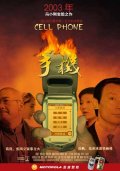
In Hong Kong, when you talk about "Lunar New Year movie",
you are usually referring to mass appealing non-sensical
comedies that are overcrowded by tons of popular stars.
But it is the totally different case for mainland "Lunar
New Year movie" Cell Phone.
With a "Lunar New Year movie"'s tag, Cell Phone is quite a surprise as it is nothing like what you would expect. Commerical movie director Feng Xiao-gang, who was once regarded as the mainland version of Wong Jing, didn't really try to package his film in a pleasant and uplifting mood in order to fit the Lunar New Year theme, a more sophisticated and ambitious theme, incorporated with dark comedy element, is rather the main dish here. The story is adapted from a novel. It begins with popular TV host Yen (Ge You) having an affair with magazine reporter Wu (Fan Bing Bing). It is discovered by his wife because he has left his cell phone, with Wu's flirting voice message stored, at home. Later after Yen is divorced, he soon falls in love with a tutor Shen (Xu Fan), but then, at the same time, he is still maintaining his secret affair with Wu. This triangular relationship becomes more and more complicated as the cell phone is misused again and again...
Is cell phone really guilty of ruining Yen's life? At first glance, it seems that it is depicted as quite an negative tool. For instance, Yen's office meeting is always interrupted due to the constant ringing of everyone's cell phone one after another; Yen is also blackmailed because his "voice" is recorded by a cell phone. Nevertheless, if you try to take a deeper analysis of these so called negative impact, you would realize that it is the behavior of the person using the cellphone instead of the cellphone itself that is causing all the troubles. If everyone in the office turn off the cell phone when they are working, or if Yen behaves himself, none of the above disaster would have happened. To further enhance the neutral nature of cell phone, that it does not actually have a positive or negative trait attached, a scene is added in the end depicting how Yen has missed the opportunity to visit his dying auntie (or grandma, I forgot) because his cell phone is turned off. By that it demonstrates how a cell phone can be used in a positive way. Therefore, it is not the cell phone itself, but the person using it, that makes a difference.
One interesting point that is worth to mention is that, although Yen deserves what he got, you can still feel a sense of sympathy from the filmmaker. It seems that while the film is trying to position cell phone as neutral, on the other hand, it is still unclear about whether the advance of such technology is creating a positive or negative impact on the society. Does cell phone really bring our tie too close? Just a dial and you can reach the person you want to talk to, just a phone bill and you can know the incoming and outcoming calls of the person, and just a click and you can record the voice of the person, privacy has simply vanished as everyone is almost like "transparent" now! In the end, the film does not leave a conclusion saying it is good or bad, but from the fact that Yen is still unable to get away from his "cellphone nightmare" even after he has thrown away his cell phone, as his friend is introducing a new picture taking cell phone to him, it exemplifies how, whether you accept it or not, the prevalence of cell phone has become a irresistible phenomenon and the technology will only go further and intrude your privacy more and more seriously instead of reverting to the past.
Actor-wise, Ge You possesses a confident face, making him an ideal candidate for the playboy character. The reserved Xu Fan and passionate Fan Bing-bing also make a good antithetic pair as Yen's love interests. Technically speaking, the cinematography, production design and setting are also top-notch, which helps to make it an engaging viewing experience.
I was never aroused by Feng Xiao-gang and his movies as his reputation as the "the most successful commercial director in mainland China" had always given me an impression that he was merely another Wong Jing or Joe Ma Wai-ho and that the mainland humor was supposed to be not welcome by audience from the South... However, after the viewing, I have to say that the provocative and introspective Cell Phone has changed my perspective quite a bit.
P.S. Beware that the image quality of the legit mainland version of VCD is quite low. The poor contrast switch really hurts the eyes and the wording of Chinese subtitles are so small that you could hardly read at all. Since some of the characters speak in different dialects, you should make sure that your Chinese hearing ability is good enough that you don't need to rely on the subs to comprehend the story.
Reviewed by: Kantorates