| Beyond Hong Kong Movie Reviews Menu |
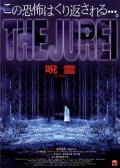
Jurei
Buy this film!
| Rating: | N/A |
| Year: | 2003 |
| Genre: | Horror |
| Director: | Koji Murakami |
| Cast: | Yui Ichikawa, Yutaro Kamata, Yuma Suzuki |
My review headline is descriptive both of this film and of my reaction to
it, because I am a bona fide "Juon Junkie" who was expecting this movie to
be little more than a poorly done blatant rip-off of Shimizu Takashi's
influential spookfest. Though I am forced to concede concerning the much
too obviously lower production quality of this film, the storyline and the
way it unfolds is in no way inferior to "Juon's" and is in fact on a par
with, and I dare say in some instances even surpasses, what we were presented
with in the Juon series. (I would have never imagined that I'd be
espousing these words.) But before addressing this movie, I want to give a
little background information along with some clarifications.
Despite the fact that no one seems to appreciate my efforts, I continue to persist in sharing what information I deem important in relation to numerous films which are now coming to us from East Asia; Jurei is definitely no exception and is in fact one of the 'best' and 'worst' examples.
Beginning with its title -- the film's original Japanese dual title is "jyurei gekijyouhan: kurojyurei," which translates into English as Cursed Spirits, the Theatrical Edition: Black Cursed Spirits, hence, as alternately rendered, JuRei the Movie: Kuro Jurei. This same film is also known as Jurei the Movie 2.
(I can already hear the collective sigh of frustration going up: "Oh, hell! ??She is going to go into another of his long-winded explanations as to why the film titles are different and so confusing." You're absolutely correct -- so please skip past the rest of this review if you care nothing for gaining a deeper understanding into the history, background & intricacies of this movie and the series it was born out of.)
"Broadway Productions," a Tokyo company, has made something of a name for itself (and not always a 'good' one, quite frankly) as a major purveyor of low-budget horror (and, as some might say, of low-budget 'horrible'). They are particularly notable for the popular television series, Noroi no Bideo (Cursed Video), which also gave rise to two theatrical releases.
Broadway had also branched out into the 'direct-to-video' market with a V-Cinema series called Jurei (or Julei -- other romanized variations include JuRei Ju-Rei JuLei Ju-Lei). The series launched with a collection of documentary-style vignettes and was released under the title Jurei: Shinrei ['new spirit'] Mystery File. The V-Cinema release and its two subsequent sequels were well-enough received to give rise to a theatrical version called Jurei the Movie, which was then followed by -- oh, but you've guessed it already! :) While Jurei (the first theatrical movie) kept the same presentation format as its V-Cinema siblings (think "Creepshow" or the lesser known "Nightmares"), its theatrical sequel, Jurei 2 (as I shall henceforth be referring to the current film throughout this review), retained the 'vignette' style of its predecessors, but it is the first in the series where the individual episodes are "interrelated" rather than self-contained independent stories.
In somewhat similar fashion of the Juon series, Jurei 2 ties all of its episodes, or "chapters," together via an established timeline of events -- but whereas the timeline throughout the Juon series is arranged in a seemingly random and haphazard fashion, Jurei 2 progressively works "in reverse," from the time we witness the "first" attack in "Chapter 10" through to the film's "conclusion" in the "Prologue." Yes, the concept is bizarre and sounds highly impractical & open to total predictability, but believe me, the concept works on so many different levels in this movie and is remarkably effective & engrossing (although I must admit that the final scene was just a little bit of a letdown -- I felt it needed just a tad bit more fleshing out & exposition, but it's nothing to get hung-up on).
An unexplained series of ghost attacks occur over the course of a single day (which causes me to interpret the chain of events as something that takes place on a sort of "seasonal" basis, rather than on the "on-going" basis which is suggested in the "Juon" series -- but this is just my own personal interpretation). Much like in Juon, the spectral epidemic spreads in a virus-like fashion -- but it is not just some random plague killing indiscriminately, and yet at the same time there are no identifiable tangible vectors like the Saeki house in Juon or Sadako's cursed video tape in Ring.
My biggest complaints about the film are in regard to what pretty much everyone will concur are the "blatant rip-offs" of other popular movies, particularly the "clicking noise" made by Saeki Kayako in the Juon series (which had a very specific meaning in Kayako's case because it was directly related to something we witnessed in the Juon universe, which helped to explain why Kayako was the only ghost in the Juon series the noise was associated with -- and, no, it's not the same reason they try to make you think it is in the Hollywood remake called The Grudge). And yet, despite the fact that it 'IS' such a rip-off, I'm shamed to admit that where I responded to "Kayako's" clicks & croaks as being little more than curious story elements, I actually get a physical reaction upon hearing these similar sounds emanating from the ghosts in Jurei 2 -- don't ask me why that is, but it is unsettling enough that if I were to hear those same noises on a dark street somewhere I'd consider running very fast and not looking back.
There is also a scene which deliberately lifts a filming technique straight out of Juon 2 (V-Cinema edition).
Actually, I can almost forgive the many similarities to (and "borrowed" elements from) the Juon series because there is a scene in the movie which I am sure is an overly-blatant homage to Shimizu-san's influential work, but it is a scene which also seems to clearly hint that the events taking place in the Jurei 2 universe are all precursors to the events recounted in the "Juon" universe, thereby strongly suggesting that even though the ghost attacks between the two stories are different and separate from one another that both of these events may have actually taken place within the same "reality" -- and that's all I'm going to say about that!
Then, too, there is the Sadako-inspired "death mask" thing that was pulled right out of Ring.
The only other complaint I can lay at this film is its low production quality. It hits you right away as the title sequence gives way to the opening scene: everything is overly dark, hazy, flickery and grainy -- you can't help but notice it (somewhat reminiscent of Head Hunter, another 'good story; cheap production' for those of you familiar with this Dead Alive Productions ) here's the big surprise: by the time you are about a fourth of the way through the movie it won't have been an issue to you at all -- in fact, you may very well find yourself "appreciating" the low photographic quality of the film, because as the events play themselves out on the screen and as you find yourself being drawn deeper into the story as it progresses, these qualities actually wind up giving the entire production a very haunting and surreal look & feel which seems to compliment its subject matter (can't quite say that about Juon). By the time the end credits begin to roll, you will not have even cared that you had just watched the entire film in "full screen" format! Even so, I still would have liked to have seen what director Shiraishi Kohji might have accomplished with just a little bit more of a budget to work with.
And there it is, from a hardened "Juonophile." If you really (and I mean "REALLY") liked/loved Juon (the complete 4-part series), I don't think you'll regret having added this title to your cool-lection.
Reviewed by: Kelly Kelley